
Why Marc Chagall’s Le Cirque Series Is So Popular
Marc Chagall’s Le Cirque series - consisting of 38 lithographs—23 in color and 15 in black and white - remains one of the most beloved bodies of work in 20th-century modern art. Vibrant, whimsical, and deeply poetic, these prints capture the magic of the circus while expressing Chagall’s unique dreamlike world.
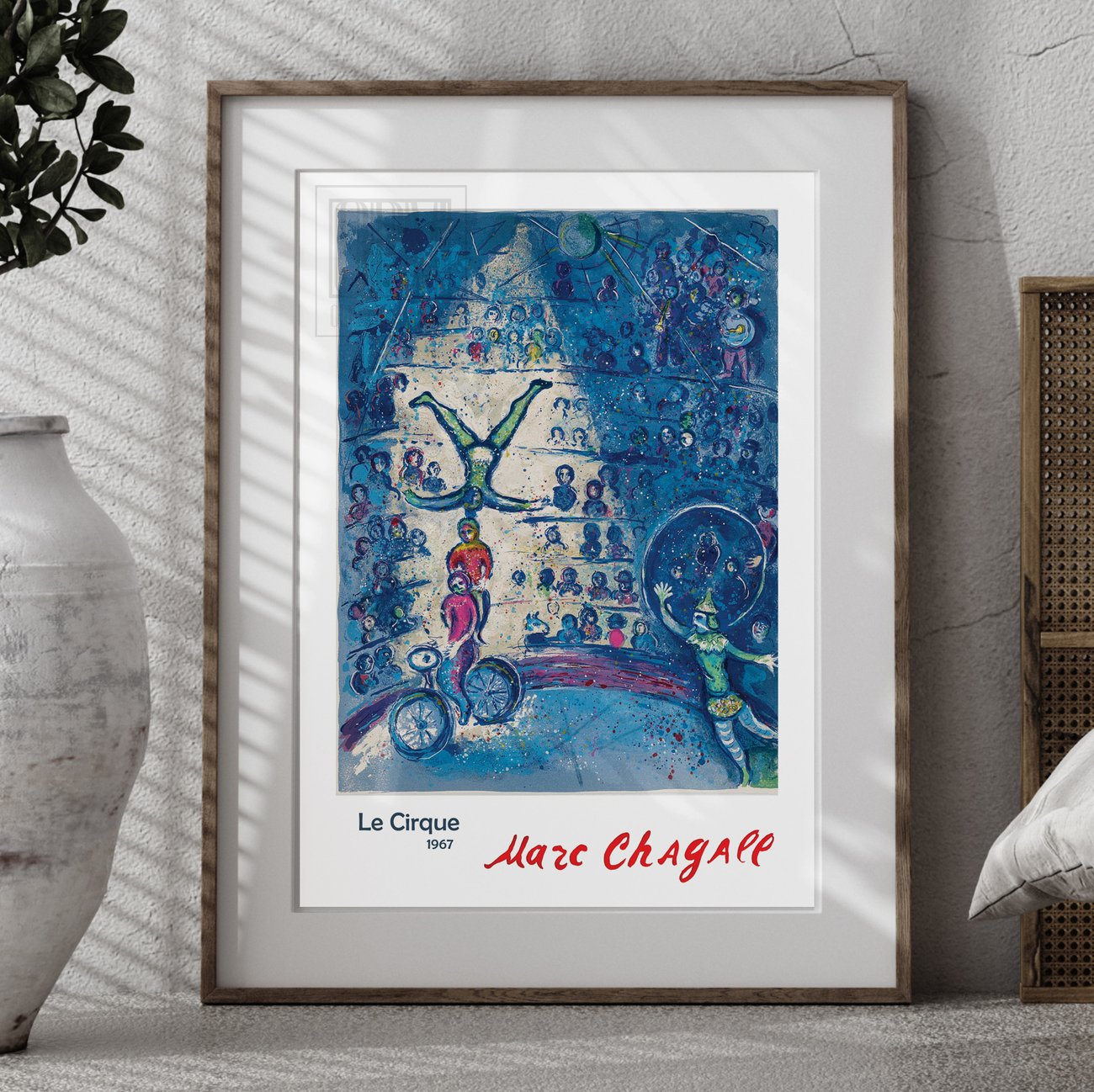
What is Marc Chagall’s Le Cirque series?
Le Cirque is a suite of 38 lithographs created by Marc Chagall in 1967, commissioned and published by the legendary art dealer Tériade. The series explores the world of the circus—acrobats, clowns, horses, trapeze artists—through Chagall’s signature poetic style, mixing vivid color, fantasy, and nostalgia.
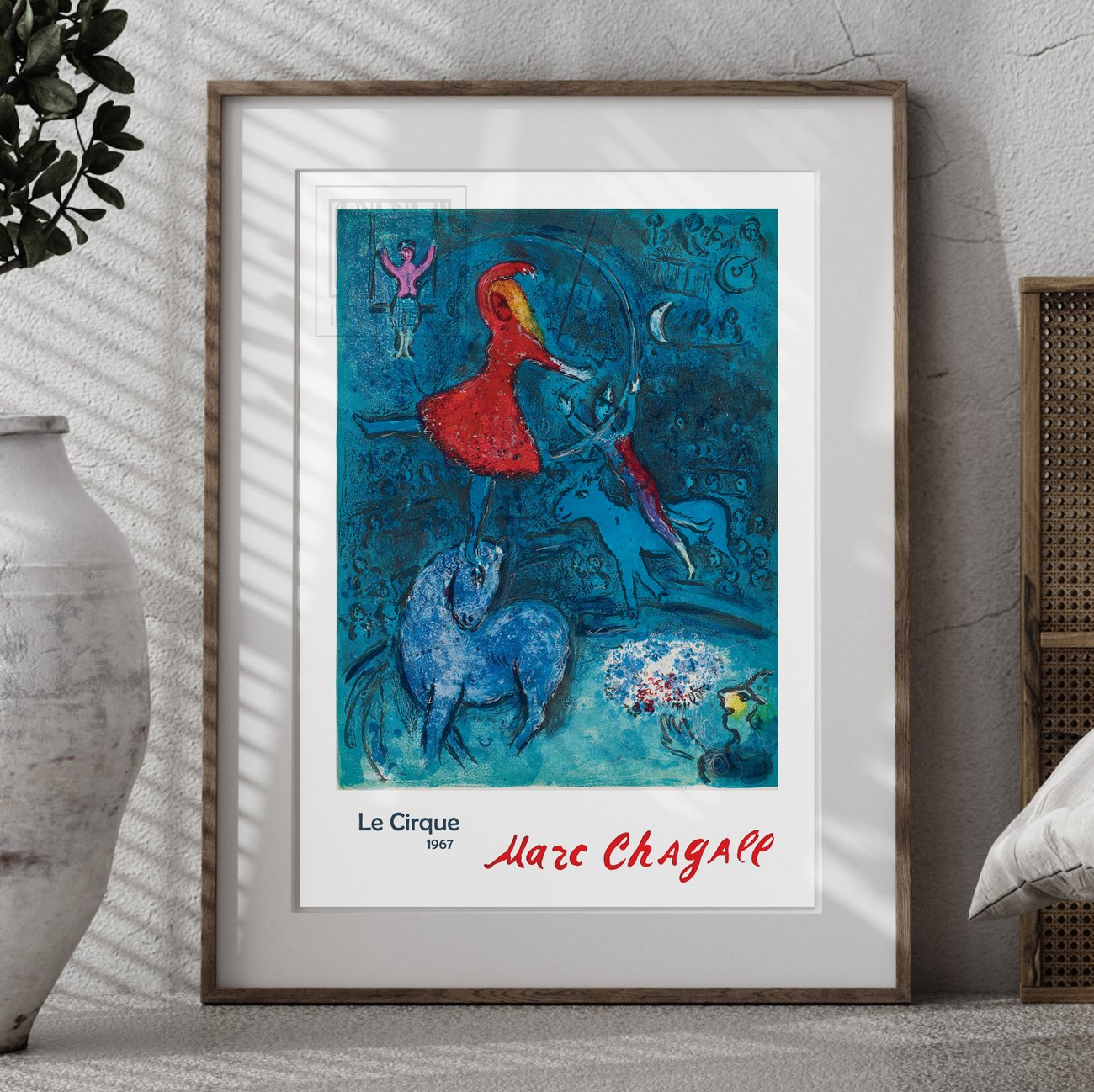
Why is the Le Cirque series so popular?
There are several reasons:
- Universal themes of joy, movement, and childhood wonder
The circus is a universal symbol of playfulness and imagination. Chagall transforms it into a dream, making the imagery instantly accessible and emotionally uplifting.
- Chagall’s mastery of color and composition
His strong blues, yellows, and reds, together with fluid, floating figures, create prints that feel alive. Collectors love how the works glow even in reproduction.
- A balance between fantasy and human emotion
Chagall uses circus performers as metaphors for vulnerability, passion, and artistic life. Behind the joy, there is tenderness—this emotional depth makes the series timeless.
- Art-historical importance
Le Cirque is considered one of Chagall’s most accomplished lithographic cycles. It sits alongside his major graphic series such as Daphnis & Chloé and La Bible, making it highly significant for museums and collectors.

What inspired Chagall to focus on the circus?
Chagall had a lifelong fascination with the circus. As far back as the 1920s, he visited Parisian circuses like the Cirque d’Hiver, where he sketched performers backstage. He viewed the circus as:
- a microcosm of life,
- a theatre of emotion,
- and a place where art and risk meet.
For Chagall, performers represented the artist himself—balancing on a tightrope between reality and imagination.

What themes can we find in the Le Cirque lithographs?
The series mixes:
- Joy and celebration — dancers, musicians, jugglers
- Romance — lovers in the sky, celestial horses
- Mysticism — angels, moonlit scenes
- The absurd and playful — oversized animals, floating clowns
- The theater of life — fragility, performance, grace
This diversity is one reason the series appeals to such a wide audience.

How does Le Cirque compare to Chagall’s other works?
It stands out for its lightness and energy. While Chagall’s Biblical and folkloric works can be more solemn, Le Cirque is full of movement, color, and joy. Many consider it the artist’s most accessible and decorative series—the prints are both sophisticated and instantly lovable.
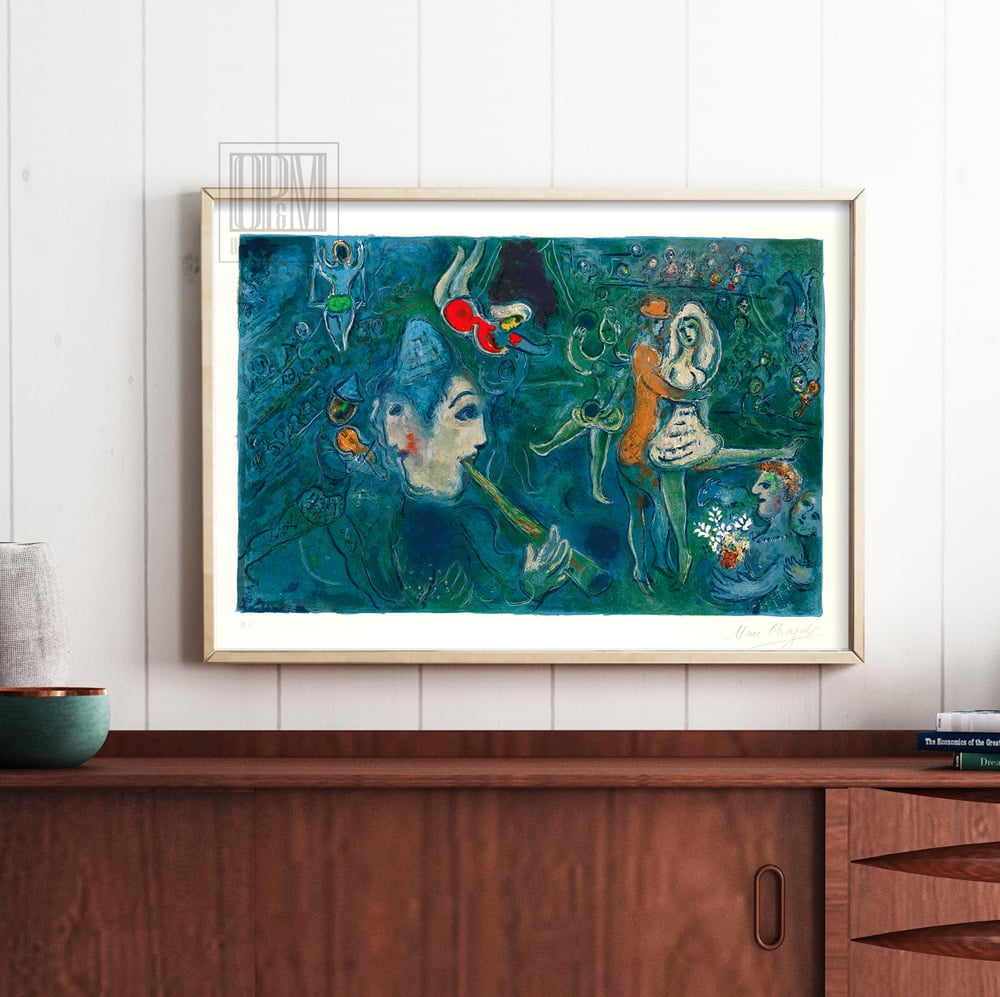
What makes these images feel so “Chagall”?
- Figures floating in space
- Rich blues and vibrant yellows
- Animals acting as symbolic companions
- A blend of folklore, memory, and dream
- A sense of joy tinged with melancholy
These visual signatures make Le Cirque instantly identifiable and deeply personal.